What We Do.

Empowering Active Communities.

Geographic Priority Populations

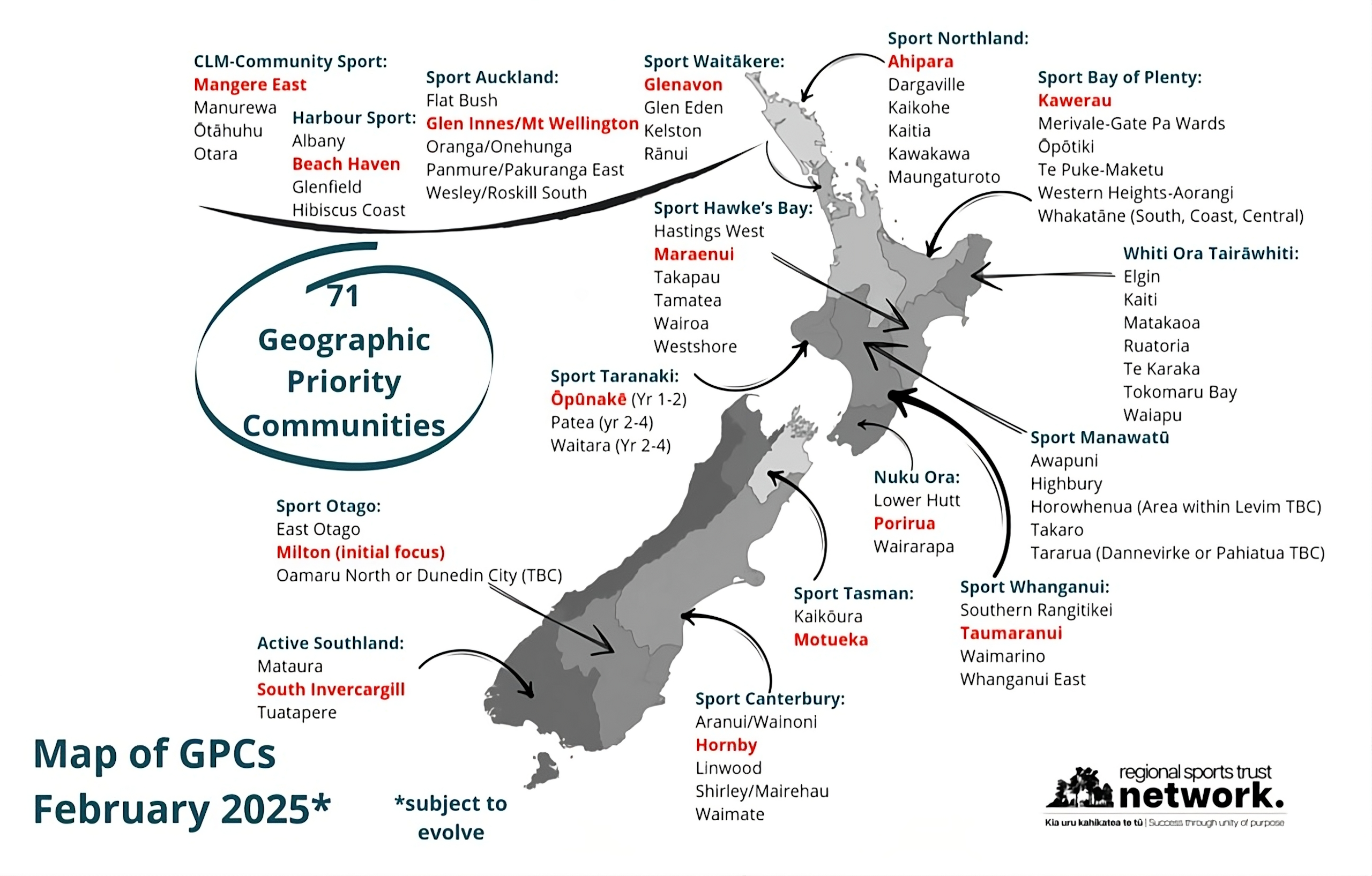
71 Geographic Priority Communities (GPCs) have been identified by 17 Regional Sports Trusts (RSTs) forming a national networking group across New Zealand.​​​​​​​​​​​​​​

    A GPC is an area into which an organisation will prioritise its workforce and resources. GPCs are identified as areas that contain priority populations that align with the organisation’s strategy. These may include specific ethnic populations (e.g., Māori, Pasifika, Asian etc.), specific age groups (e.g., tamariki and rangatahi), those living in low socioeconomic areas, disabled individuals or more generally those more likely to miss out on opportunities to be active.

    This strategic focus allows for a system-build approach that works deep in the community to make a sustainable positive impact relating to physical activity, health and wellbeing.

    GPCs are identified resulting from insights gathered from analysing macro-data sets including Census data (Stats NZ), Active NZ data (Sport NZ ihi Aotearoa), as well as information from the Ministries of Health, Education and Social Development. Importantly, these high-level data are combined with locally led insights gathered from the community within the geographic area. Using local knowledge is key to understanding what is already working well within the community, as well as the wants, the challenges and readiness of the community relating to being active.

    The content relating to GPCs includes   

    GPC-specific information, including the foundation plan for the RST Network, the methodology used to identify GPCs, guidance documents from Sport New Zealand, presentations from International Sport organisations regarding similar focused approaches, and maps of the GPCs across the network.

    Evaluation Workstream information shared by the network relates to processes and models used to measure and monitor change.

    Professional Development GPC resources shared by the network cover a wide range of topics related to policies and engaging with the community to provide special guidance for engaging with Māori.

    There are sections dedicated to the annual in-person hui that contain copies of the material presents. And to the impact stories (case studies) from each RST showcasing the mahi completed over a year for an individual GPC. These contain narrative descriptions, images and short videos of the work including quantitative and qualitative evidence of the impact.​​​​​​​

    ​​​​​​​

    Latest News

    Any questions? Contact us today